
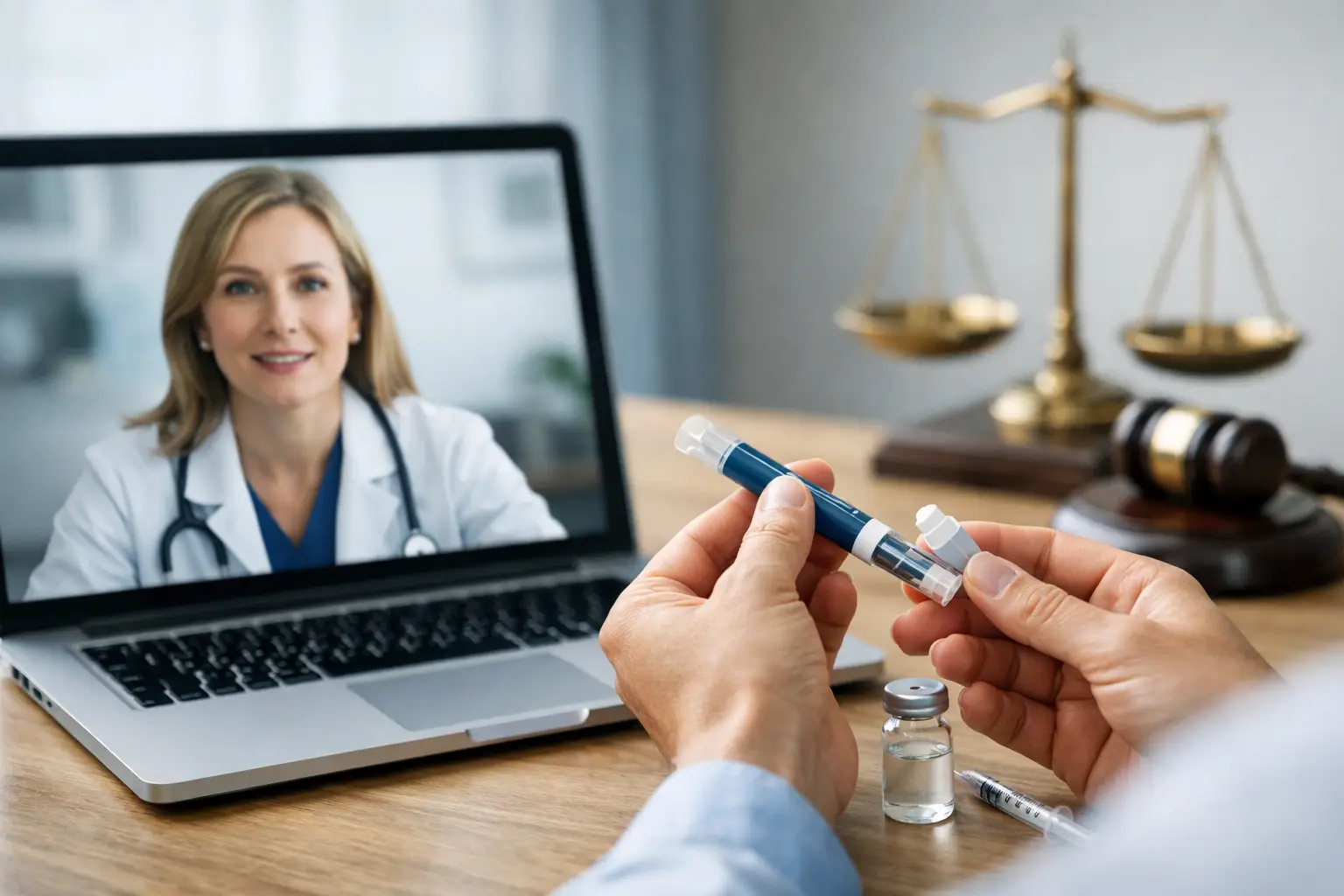
For people who have spent years cycling through diets, workouts, and frustrating weight-loss programs, a virtual appointment can feel like a more realistic path to medical help. But can telehealth prescribe semaglutide legally? In many cases, yes. A licensed clinician may prescribe semaglutide through telehealth when the patient is appropriately evaluated, medically eligible, and located in a state where that clinician is licensed to provide care.
The key word is appropriately. Telehealth is not a loophole around medical standards. A legitimate virtual weight-loss program should use the same clinical judgment expected in an office: review your health history, medications, goals, risks, and whether a GLP-1 medication is a suitable option for you.
Can Telehealth Prescribe Semaglutide Legally in Your State?
Telehealth prescribing is generally legal in the United States, but healthcare licensing is primarily regulated state by state. In most situations, the patient is considered to be receiving care in the state where they are physically located during the appointment. That means the prescribing physician, nurse practitioner, or other qualified clinician must be licensed or otherwise authorized to practice in that state.
A provider licensed only in Florida, for example, cannot automatically prescribe for a patient who is sitting at home in another state. Reputable national telehealth practices maintain appropriate clinician licensure and operational processes for the states they serve.
Semaglutide is a prescription medication, not an over-the-counter weight-loss product. It requires an order from a licensed medical professional and must be dispensed by a properly licensed pharmacy. Federal and state rules can change, and individual state requirements may differ, so a trustworthy program verifies a patient's location before care begins.
For patients, the practical takeaway is simple: telehealth can be a legal and convenient way to discuss semaglutide, but the provider must be authorized to treat you where you are located and must determine that treatment is clinically appropriate.
What Makes a Telehealth Semaglutide Prescription Legitimate?
A legal prescription is more than a questionnaire followed by a checkout page. The clinician must establish a valid patient-provider relationship and make an informed medical decision. Telehealth can support that process, but it cannot replace it.
A thorough evaluation commonly includes your current weight and weight history, body mass index or other relevant measurements, medical conditions, prior weight-loss efforts, medications, allergies, and family history. The clinician should also ask about conditions that can affect GLP-1 eligibility, including certain thyroid cancers, pancreatitis history, kidney concerns, gallbladder disease, pregnancy, or plans to become pregnant.
Semaglutide is not right for everyone. It may be prescribed for eligible adults based on their health profile and treatment goals, but a responsible provider does not promise that every patient will qualify. If a program guarantees a prescription before reviewing your history, that is a reason to pause.
The clinician should also explain what the medication can and cannot do. GLP-1-based treatment may help reduce appetite, improve fullness, and quiet persistent food noise for some patients. It is still medical treatment that requires dose management, side-effect monitoring, and ongoing communication. Nausea, constipation, diarrhea, vomiting, and changes in appetite can occur, especially as doses are adjusted.
Why Ongoing Medical Guidance Matters
Getting a prescription is only the first step. The more meaningful question is whether you will have clinical support after the initial visit.
Semaglutide dosing is usually started gradually rather than at a full dose on day one. This approach can help the body adjust and may reduce gastrointestinal side effects. Your clinician may need to adjust the plan based on how you respond, whether side effects occur, changes in other medications, or new health concerns.
Follow-up care also creates space for honest conversations about progress. Weight loss is not always linear. Some patients see early changes in appetite or food noise, while others need more time. Plateaus can happen. A medically guided program looks at the whole picture instead of treating the number on the scale as a personal scorecard.
That matters for people who have been told, directly or indirectly, that weight struggles are simply a failure of willpower. Biology, sleep, stress, medical conditions, food environments, and long-standing habits all play a role. Appropriate medication can be one evidence-based tool, but it works best within a plan built around health, nutrition, movement, and realistic follow-through.
Branded and Compounded Semaglutide Are Not the Same
When evaluating telehealth programs, ask exactly what medication is being offered and how it will be dispensed. FDA-approved branded semaglutide products are prescription medications with specific approved uses, doses, labeling, and safety information.
Some programs may discuss compounded semaglutide. Compounded medications are not the same as FDA-approved branded medications, and they are not reviewed by the FDA for safety, effectiveness, or quality before they are marketed. Federal rules around compounding and drug shortages can affect when compounded versions may be offered. These rules and availability can change.
Patients deserve clear answers, not vague wording. Ask whether the medication is FDA-approved or compounded, which pharmacy will fill it, what the total cost includes, and how refills and follow-up care are handled. Be especially cautious about products advertised as semaglutide without a prescription, unmarked injections, or medications shipped without identifiable pharmacy information.
What to Expect From a Reputable Virtual Weight-Loss Visit
A quality telehealth visit should feel like medical care, not a sales funnel. You should have a chance to discuss your health goals, ask questions, and receive a straightforward explanation of potential benefits, risks, costs, and next steps.
Before your appointment, be prepared to share an accurate medication list and relevant medical records if requested. Mention any past reactions to weight-loss medications, diabetes medications, stomach or intestinal conditions, history of pancreatitis, kidney disease, gallbladder problems, or a personal or family history of certain thyroid cancers. Accurate information helps protect your safety and helps the clinician make a better recommendation.
If you are eligible for a prescription, the program should tell you how the prescription is sent, how medication delivery or pharmacy pickup works, when you can expect follow-up, and who to contact with questions or side effects. You should never have to guess whether there is an actual clinician behind the service.
South Florida Trim Clinic provides medically guided weight-loss care through telehealth for eligible patients across 47 states. The focus is not on promising a medication to everyone. It is on helping patients understand their options, complete an appropriate clinical screening, and receive ongoing support when a GLP-1 treatment plan makes sense.
Questions to Ask Before Choosing Telehealth Care
Before enrolling, ask whether the provider is licensed in your state, whether you will meet with a qualified clinician, and whether the practice provides ongoing follow-up. Ask what medication is being prescribed, whether it is FDA-approved or compounded, and whether the quoted monthly price includes the medication, consultation, medical supervision, and shipping or pharmacy fees.
It is also reasonable to ask how the practice handles side effects, refill requests, dose changes, and urgent medical concerns. Clear answers are a sign of a program designed around patient care. Pressure to pay immediately, unclear medication sourcing, or claims that semaglutide is risk-free are not.
A Convenient Option, Not a Shortcut
Telehealth has made medically supervised weight management more accessible for busy adults who may not have time for repeated in-office appointments. It can offer privacy, convenience, and continuity of care without requiring you to put your health on hold.
Legal telehealth prescribing still depends on real medical standards: a licensed provider, a valid evaluation, state-specific authority to treat you, appropriate pharmacy dispensing, and follow-up care. If you are considering semaglutide, choose a program that respects those standards and treats your health goals with the seriousness they deserve.
The right next step is not to chase the fastest prescription. It is to have an honest clinical conversation about what has made weight loss difficult, what support you need, and whether GLP-1 options may be appropriate for your health.