
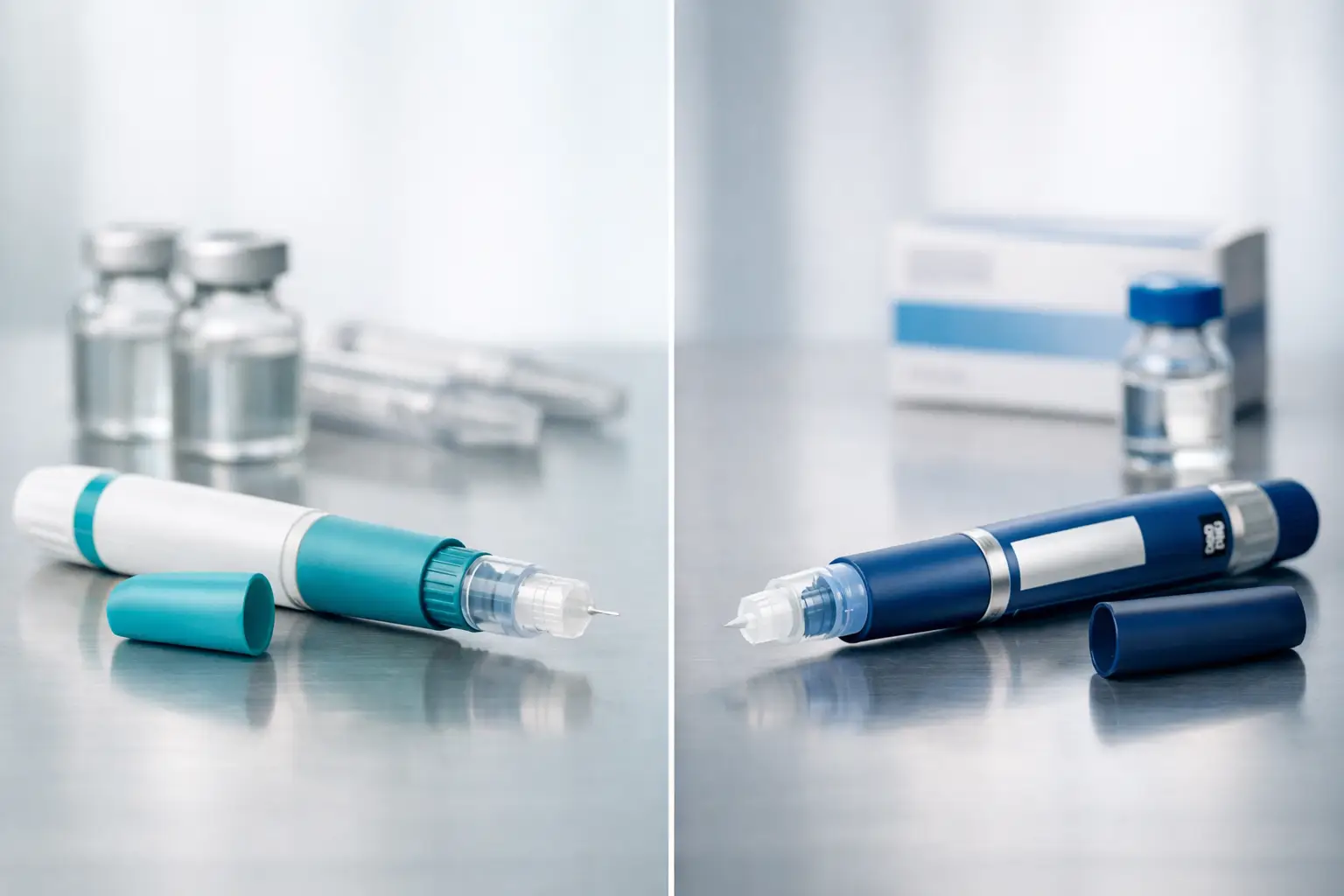
For many people who have spent years cycling through diets, exercise plans, and conflicting nutrition advice, a GLP-1 medication can feel like a meaningful new option. But the choice between compounded versus branded GLP-1 treatment is not simply a question of price. It involves medication sourcing, FDA approval status, supply, dosing, and the quality of the medical care guiding the process.
The right answer depends on your health history, treatment goals, access to medication, and eligibility. A medically guided program can help you understand the differences clearly, without treating your weight struggle as a failure of willpower.
Compounded Versus Branded GLP-1: The Core Difference
Branded GLP-1 medications are FDA-approved prescription drugs made by the pharmaceutical companies that hold approval for those specific products. Depending on the medication and indication, brand-name options may be approved for type 2 diabetes, chronic weight management, or both. They are manufactured under FDA-regulated standards and come in specific approved formulations, strengths, delivery devices, and labeling.
Compounded GLP-1 medications are prepared by a licensed compounding pharmacy for an individual patient. Compounding has a long-standing role in medicine. It may be used when a patient needs a formulation that is not commercially available or when an FDA-approved drug is listed as being in shortage and federal requirements for compounding are met.
The most important distinction is straightforward: compounded medications are not FDA-approved products. That does not automatically mean every compounded medication is inappropriate, but it does mean it has not gone through the same FDA premarket review for safety, effectiveness, and manufacturing consistency as the branded drug.
Why Some Patients Consider Compounded Options
Access is a major reason. Branded GLP-1 medications can be expensive, may not be covered by insurance for weight loss, and have experienced supply constraints at different times. For adults paying out of pocket, the difference between a high retail price and a more accessible monthly care program can determine whether treatment is even possible.
Convenience also matters. Busy professionals and parents may not have the flexibility for repeated in-person appointments or the time to navigate changing insurance requirements. A legitimate telehealth program can offer screening, prescriptions for eligible patients, ongoing support, and follow-up from home.
Still, affordability should never be the only filter. A low advertised medication price means little if the source is unclear, there is no licensed clinician involved, or the program does not provide appropriate monitoring. Weight-loss medication is healthcare, not a product to buy casually online.
What Branded GLP-1 Medications Offer
The principal advantage of a branded GLP-1 is that it is an FDA-approved medication with a defined, reviewed formulation. The approved product has specific prescribing information, clinical trial data, dosing instructions, contraindications, and safety warnings. It is also dispensed through the standard prescription drug supply chain.
For patients with insurance coverage, a branded medication may be financially practical despite its list price. Coverage can vary widely by plan, diagnosis, employer benefits, and prior authorization requirements, so there is no universal answer. Some patients find coverage is available, while others learn their plan excludes anti-obesity medications altogether.
Branded products also typically come in manufacturer-designed injection pens. For some people, that makes administration feel simpler than drawing a prescribed dose from a vial. However, ease of use does not replace the need for clinical follow-up, nutrition habits, activity, and a realistic plan for maintaining progress.
What to Understand About Compounded GLP-1 Medication
Compounded medication may be considered in limited circumstances under applicable laws and regulations, including when an FDA-approved medication is in shortage. The rules can change as drug shortages are resolved, and a reputable medical provider should stay current on what can be prescribed and dispensed legally.
Patients should also understand that not every product marketed online as a “GLP-1” is the same. Be cautious with sellers that do not require a medical evaluation, do not identify the dispensing pharmacy, promise a specific outcome, or make treatment sound risk-free. Those are not the standards of responsible medical care.
If a compounded option is clinically appropriate, patients should know the name of the pharmacy, the prescribed medication and concentration, the dosing instructions, and how to contact their care team with questions. Clear guidance is especially important with vial-and-syringe medications, where dose measurement errors can occur.
There is another point worth asking about directly: the active ingredient. FDA has raised concerns about compounded products made with semaglutide salt forms, such as semaglutide sodium or semaglutide acetate, rather than the active ingredient used in FDA-approved semaglutide products. A prescriber and dispensing pharmacy should be able to explain exactly what has been prescribed and why.
Safety Depends on More Than the Medication Name
Whether a patient uses a branded medication or an appropriate compounded option, GLP-1 treatment needs medical oversight. These medications can cause side effects, commonly including nausea, vomiting, diarrhea, constipation, abdominal discomfort, and reduced appetite. Some effects improve during dose escalation, but persistent or severe symptoms require attention.
GLP-1 medications are not appropriate for everyone. Your clinician should review your medical history, current medications, prior weight-loss treatment, allergies, and relevant personal or family history before prescribing. Certain conditions and risk factors may make a GLP-1 medication unsuitable or require extra caution.
A responsible program also does not rush dosing. Increasing too quickly may worsen side effects and make it harder to stay on treatment. The goal is not to reach a particular dose as fast as possible. The goal is to find a clinically appropriate plan that you can tolerate and follow safely.
Questions to Ask Before Choosing a Program
When comparing compounded versus branded GLP-1 care, focus on the quality of the entire treatment process. Ask whether you will be evaluated by a licensed medical provider in your state, whether treatment is based on eligibility, and how follow-up care works after the prescription is issued.
You should also ask what the monthly price includes. Does it cover medical visits, medication, shipping when applicable, supplies, and support? Are there separate enrollment, laboratory, or cancellation fees? Transparent pricing makes it easier to compare programs honestly.
Finally, ask what happens if your medication is unavailable, not tolerated, or no longer clinically appropriate. You deserve a provider who can discuss alternatives, not a one-size-fits-all sales script.
Choosing a Medically Guided Path Forward
There is no universally “better” choice between a compounded and branded GLP-1 medication. A branded option may be preferable when it is available, appropriate, and financially feasible. In certain situations, a compounded medication from a properly licensed pharmacy may be considered by a qualified clinician under applicable requirements. Your personal medical needs and the current regulatory environment matter.
At South Florida Trim Clinic, care begins with eligibility and medical guidance, not promises. Through telehealth in 47 states, eligible patients can explore GLP-1 options with a licensed provider and receive ongoing support in a program designed to be accessible and straightforward.
If food noise, persistent weight gain, or repeated dieting has left you discouraged, a conversation with a medical provider can be a practical next step. You do not need to have all the answers before asking for help - you only need a care plan built around your health, your safety, and your real life.