
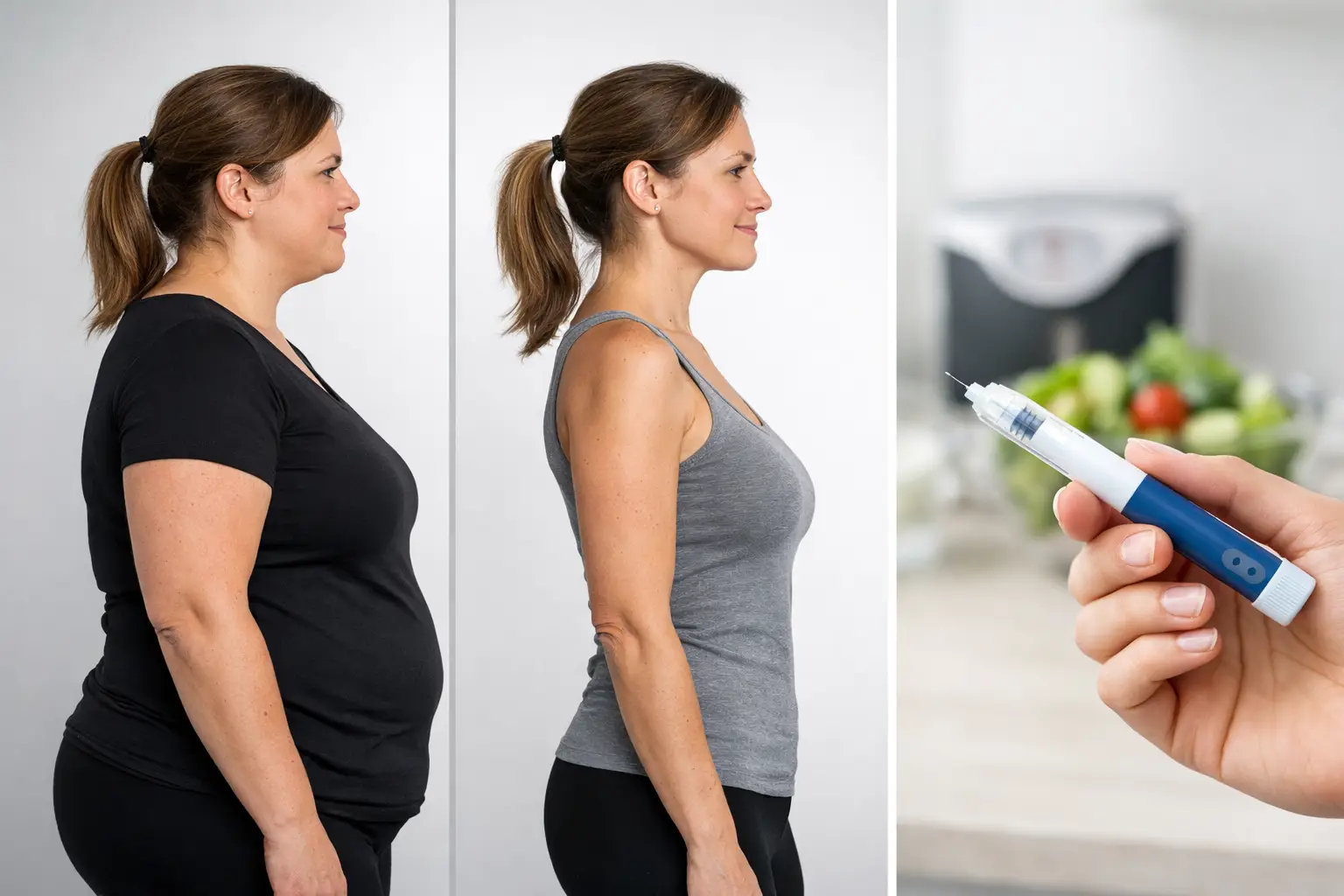
When people search for semaglutide before and after examples, they are usually not looking for flashy transformation photos. They want a realistic sense of what may change, how fast it may happen, and whether the results hold up in everyday life. That matters, because weight loss with a GLP-1 medication is not just about a lower number on the scale. It is often about reduced food noise, better control around meals, and finally having a tool that supports the work patients have already been trying to do for years.
What semaglutide before and after examples really show
The most useful examples are not the dramatic ones. They are the ones that show a pattern. Many patients do not experience a straight line from start to finish. They may lose steadily for a few weeks, hit a plateau, adjust habits, and continue making progress over time.
A realistic before and after example often starts with someone who has been stuck in the same cycle for years. They have tried cutting carbs, skipping meals, tracking points, joining programs, or pushing harder at the gym. The problem is not always effort. For many adults, appetite regulation, cravings, stress eating, and metabolic factors make weight loss harder than people assume.
Semaglutide may help by reducing hunger signals and increasing fullness, which can make it easier to eat less without feeling like every day is a fight. That is why the “after” side of the story is not only about weight. Patients often talk about less obsessing over food, fewer late-night snacks, smaller portions feeling satisfying, and more consistency.
Realistic timelines for semaglutide results
One reason semaglutide before and after examples can be confusing is that people compare very different timelines. A 4-week result is not the same as a 6-month result, and a 6-month result is not the same as a year of treatment.
In the first month, some people notice early appetite changes before major scale changes. Clothes may fit a little better. Snacking may feel less automatic. Others lose weight early, especially if they were previously consuming large portions or struggling with constant cravings.
By the 8- to 12-week mark, many patients start to see more visible progress, especially as dosing is adjusted gradually under medical guidance. This is often when the difference shows up in pictures, waist measurements, and daily habits. They may feel more in control at restaurants, less pulled toward processed foods, and more capable of following through on healthy routines.
At 4 to 6 months, the before and after contrast can become more meaningful. A patient may have lost enough weight to improve mobility, reduce joint strain, or feel more confident in work and social settings. Some also notice health benefits such as improved blood sugar control or changes in other metabolic markers, depending on their starting point and medical history.
Longer timelines matter most. Sustainable weight loss usually happens over months, not days. Fast hype may grab attention, but medically guided treatment is about improving health in a way that patients can maintain.
Three practical before and after examples
Consider a patient in their early 40s with a demanding job, frequent takeout meals, and years of failed diet attempts. Before treatment, they feel hungry soon after eating and think about food constantly. After several months on semaglutide, with medical supervision and habit changes, their portions are smaller, evening cravings are less intense, and they have a noticeable drop in weight. Just as important, they no longer feel like every meal requires extreme self-control.
Another example is a patient in their 50s who gained weight gradually over the years and now has obesity-related health concerns. Before starting, they are tired, frustrated, and skeptical because nothing has worked for long. After a structured program with semaglutide, they may see slower but meaningful progress. Their “after” is not a dramatic makeover. It is better consistency, improved confidence, and a level of progress that finally feels medically supported instead of self-directed guesswork.
A third example is someone who has done well initially on their own but keeps regaining the same 15 to 25 pounds. Before treatment, they can lose weight temporarily but struggle with maintenance because hunger rebounds hard. After starting semaglutide, they may find that staying in a calorie deficit feels more manageable. The win here is not perfection. It is having fewer cycles of loss and regain.
Why results vary from person to person
Two patients can start at the same weight and have very different outcomes. That does not mean one person is doing it right and the other is failing. It usually means there are differences in biology, lifestyle, dose progression, other health conditions, sleep, stress, and consistency.
Some people respond quickly to appetite suppression. Others need more time as the medication is increased slowly to improve tolerance. Some have side effects that require adjustments. Others are balancing work travel, family obligations, emotional eating patterns, or medications that affect weight.
That is why medically guided care matters. The best semaglutide before and after examples come from patients who are monitored, screened for eligibility, and supported through the process rather than left to figure everything out on their own.
What the photos do not tell you
Before and after photos can be motivating, but they can also be misleading when taken out of context. A photo does not show whether a person was on an appropriate dose, whether they changed their eating habits, or whether they are maintaining their results.
It also does not show side effects, plateaus, or the time it took to get there. Some patients experience nausea, constipation, or fatigue, especially early in treatment or after dose changes. Those issues can often be managed, but they are part of the real picture.
The strongest outcome is not simply a more dramatic visual result. It is steady progress with a plan that is safe, realistic, and based on medical judgment. For eligible patients, semaglutide can be a powerful tool, but it still works best as part of a broader strategy.
How to read semaglutide before and after examples the right way
When evaluating examples online, look for context. Ask how long the person was on treatment, whether they were medically supervised, and whether the result seems sustainable. A 20-pound change over several months with improved eating control may be more meaningful than a more dramatic story that offers no detail.
Also look at what changed beyond weight. Did the person talk about reduced food noise? Better portion control? More energy to move? Those are often signs that treatment is helping in a way that supports long-term success.
Be cautious with examples that promise a specific amount of weight loss for everyone. Medicine does not work that way. Good care starts with eligibility, safety screening, and a plan tailored to the patient in front of the provider.
The role of medically guided treatment
Semaglutide is not a shortcut, and it is not for everyone. It is a prescription medication that should be used under proper medical supervision for eligible patients. That process matters because dosing, side effect management, expectations, and follow-up all affect the outcome.
A structured program can help reduce the confusion many patients have faced for years. Instead of bouncing between fad diets and generic wellness advice, they get a more direct path: clinical screening, guidance, and ongoing support. For many adults, that is the difference between another short-term attempt and a treatment plan that finally fits real life.
South Florida Trim Clinic takes that approach seriously, offering medically guided weight loss with GLP-1 options for eligible patients through a telehealth model that makes care more accessible across 47 states.
If you are comparing semaglutide before and after examples, the most useful question is not “How fast can this work?” It is “What kind of progress is realistic for me, and can I get there safely with the right medical support?” That is where better decisions usually begin.