
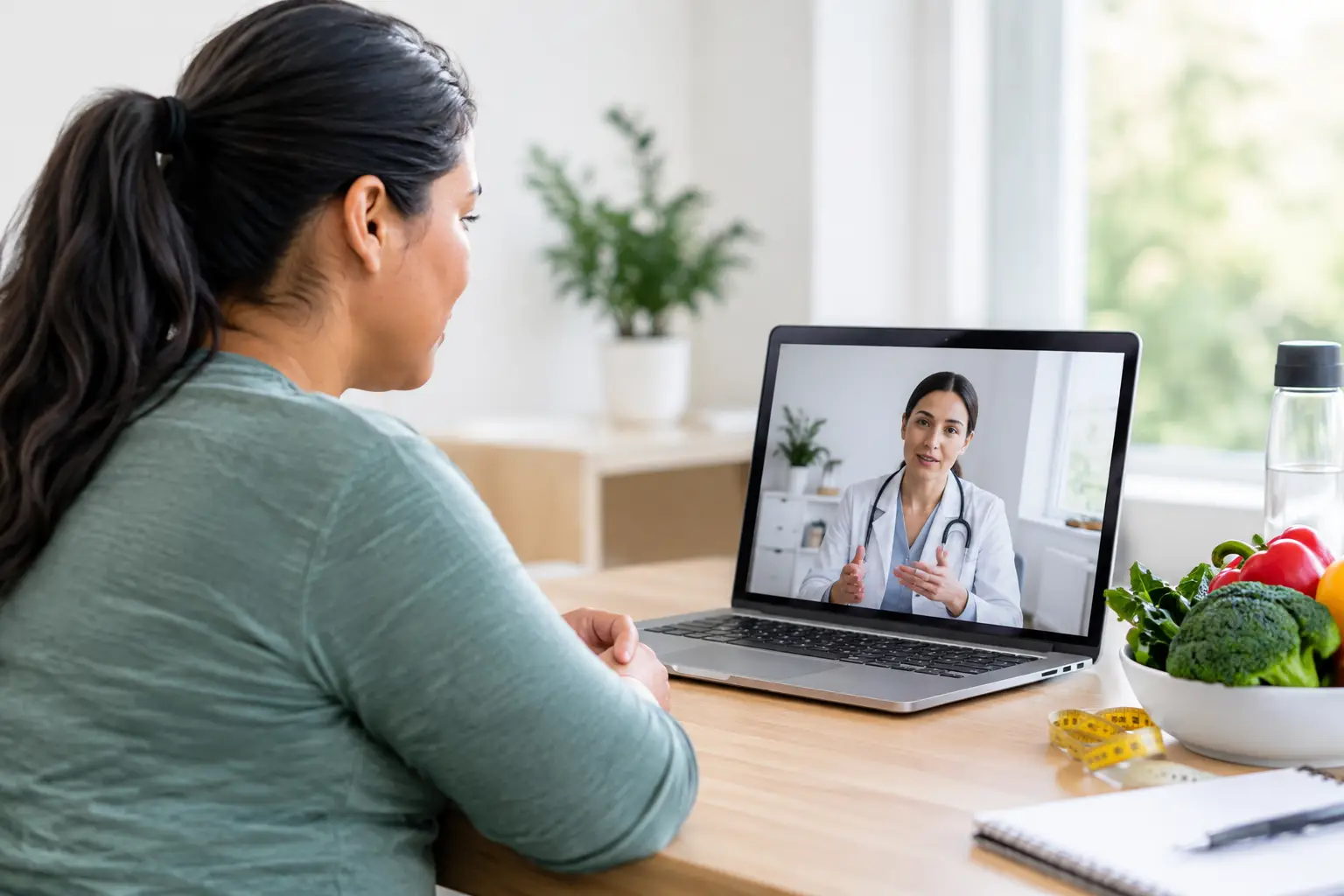
Weight loss care should not require repeated trips to an office, hours away from work, or another generic diet plan that leaves you feeling blamed when it fails. Telehealth obesity outcomes can be meaningful when remote care is built around appropriate medical screening, consistent provider follow-up, and a plan designed for the person behind the number on the scale.
For many adults, obesity is not a willpower problem. Hunger signals, food noise, sleep, stress, metabolic health, medications, and years of conflicting diet advice can all affect weight. Telehealth makes clinically guided care more accessible, but convenience alone does not create results. The quality and structure of the medical program matter.
What Telehealth Obesity Outcomes Actually Measure
A successful outcome is more than a fast change in body weight. Clinicians may look at the amount of weight lost, but they also consider whether a patient can follow the plan safely, tolerate treatment, keep appointments, and build habits that support long-term weight management.
For some patients, outcomes may include reduced food noise, fewer episodes of overeating, improved mobility, or better confidence in daily routines. Others may see improvements in health measures connected to excess weight, such as blood pressure or blood sugar. Individual results vary, and no responsible provider should promise a specific number of pounds.
The most useful question is not simply, “How much weight can I lose?” It is, “Will this program give me medical guidance and practical support I can realistically maintain?” A telehealth program should help answer that question from the beginning.
Why Medical Guidance Changes the Experience
Many people have spent years trying plans that were never designed around their health history. They counted calories, cut entire food groups, bought supplements, joined fitness challenges, and started over after every setback. That cycle can be exhausting.
Medically guided weight loss approaches obesity as a health condition that may need more than self-directed lifestyle changes. During an evaluation, a licensed provider can review your medical history, current medications, weight-related concerns, and treatment goals. That screening helps determine whether prescription treatment, including GLP-1 options if eligible, may be appropriate.
GLP-1 medications can help some eligible patients feel fuller sooner, reduce appetite, and quiet persistent thoughts about food. They are not a shortcut, and they are not right for everyone. Eligibility depends on factors such as medical history, current health conditions, medication interactions, and provider judgment. A credible program makes room for those conversations instead of treating every patient like the same case.
Medication Is One Part of the Plan
Patients often ask whether medication is all they need. The honest answer is that it depends. Medication may make it easier to follow through on nutritional changes, portion awareness, protein intake, movement, hydration, and sleep routines. It does not remove the need to pay attention to those foundations.
The goal is not perfection. It is to create a plan that feels workable on busy workdays, family weekends, travel days, and the moments when old eating patterns usually return. A provider can help adjust the approach when progress slows or side effects interfere with daily life.
The Follow-Up Factor in Telehealth Obesity Outcomes
Initial enthusiasm can carry a person through the first few weeks of any program. Sustainable progress usually requires something more reliable: follow-up. Regular remote appointments give patients a place to discuss progress, appetite changes, side effects, questions, and obstacles without waiting until they feel completely off track.
This is one reason telehealth can be a strong fit for adults with demanding schedules. Instead of postponing care because an in-person appointment is inconvenient, patients can connect with a provider from home, work, or another private location. Less travel can mean fewer missed touchpoints, which supports accountability over time.
Still, telehealth is not the right fit for every situation. Some patients may need in-person evaluation, local laboratory testing, urgent care, or coordination with an established primary care provider. A responsible telehealth clinic recognizes those limits and directs patients toward appropriate in-person care when needed.
What Consistent Monitoring Can Address
Ongoing clinical contact is especially valuable when treatment changes are needed. Providers may discuss tolerability, eating patterns, hydration, constipation, nausea, fatigue, or other concerns that can arise during weight loss treatment. Depending on a patient’s history and the treatment being considered, a provider may also recommend labs or additional medical evaluation.
This is very different from ordering a product online and trying to manage everything alone. Remote care should still feel like care: informed decisions, clear expectations, and a provider who takes your concerns seriously.
What Can Affect Results From One Person to Another
No two weight loss journeys look exactly alike. Some patients respond quickly to a treatment plan, while others lose more gradually. A slower pace does not automatically mean the plan is failing. Weight change can be influenced by age, sleep, stress, hormonal factors, activity level, underlying conditions, medications, and consistency with the care plan.
Side effects can also affect outcomes. If a patient cannot comfortably continue a treatment, the provider may need to adjust the plan or consider a different approach. This is why self-prescribing, buying medication from unclear sources, or chasing the lowest price without medical oversight can create avoidable risk.
Cost and access matter, too. Medical weight loss should not feel reserved for celebrities or people with unlimited time and money. But affordability should not come at the expense of appropriate screening, licensed care, or transparent communication about what a program includes.
How to Choose a Telehealth Weight Loss Program
Before enrolling, look beyond before-and-after photos and dramatic promises. Ask whether the program includes a medical evaluation, whether care is provided by licensed professionals, how follow-up works, and what happens if you experience side effects or do not qualify for a medication.
You should also understand pricing, prescription eligibility, and whether additional services or medication costs may apply. Clear answers are a sign that a clinic respects your ability to make an informed decision. Vague claims, guaranteed results, and pressure to purchase quickly are reasons to pause.
Medications start at $149; exact pricing varies by medication type and potency. The focus is not on selling a one-size-fits-all solution. It is on helping patients access structured medical care without making weight loss another full-time job.
Building Results That Last Beyond the Scale
The best telehealth obesity outcomes are often built through small, repeatable decisions rather than extreme rules. A patient may start by eating enough protein at meals, planning for late-afternoon hunger, taking short walks consistently, or creating a realistic response to restaurant meals. Those changes may sound simple, but they become more powerful when they are supported by clinical guidance and a treatment plan that addresses appetite and food noise.
There will be weeks when the scale moves slowly or not at all. That is a normal part of many weight management journeys. The answer is rarely shame or starting over from zero. It is an honest check-in: What changed? What is getting harder? Is the treatment still appropriate? What support would make the next week more manageable?
If you are tired of carrying this alone, a medically supervised telehealth consultation can be a practical first step. You deserve care that looks at the full picture, respects your experience, and helps you move forward with a plan built for real life.