
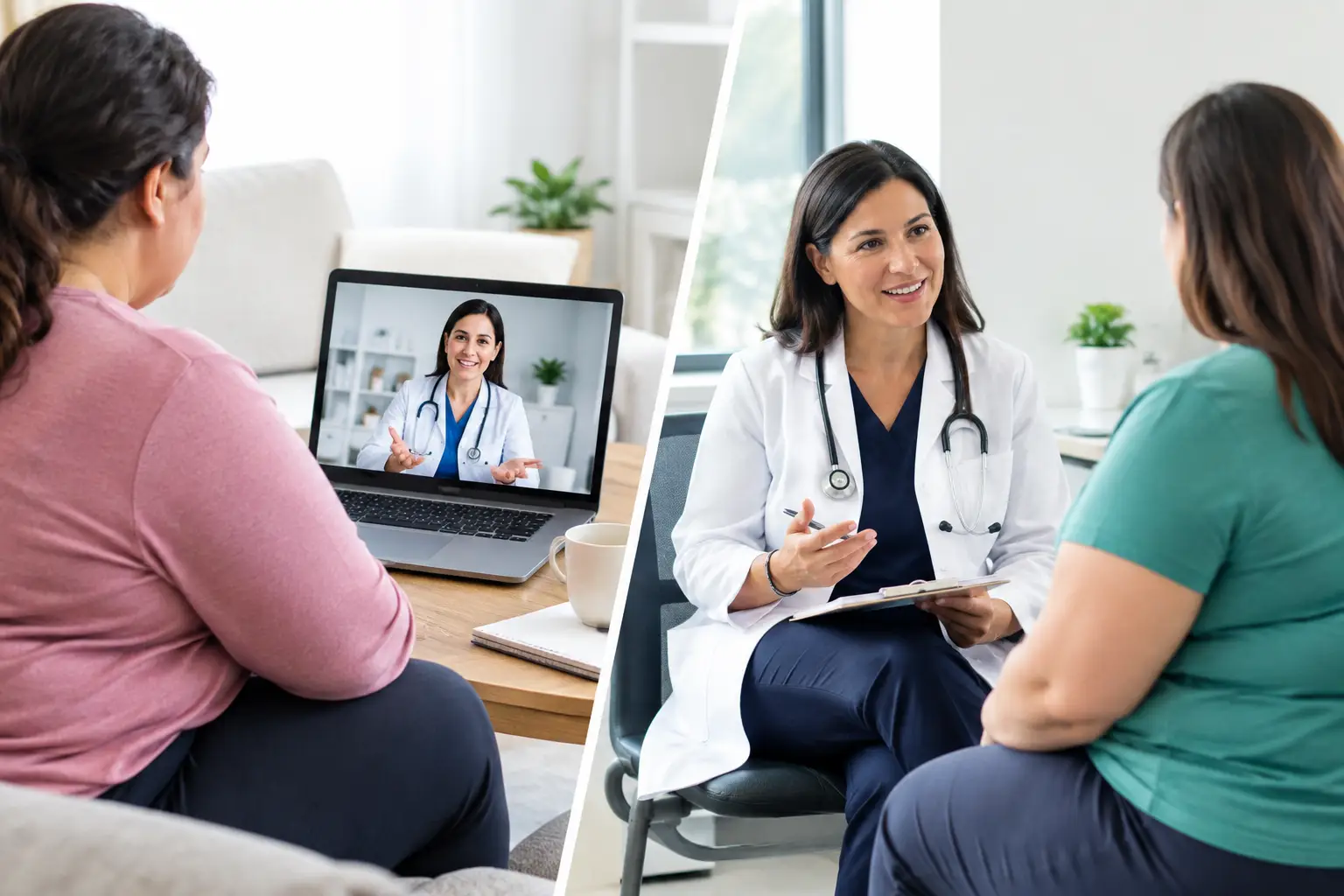
A weight-loss appointment should not require rearranging your workday, sitting in traffic, and waiting weeks for a follow-up. Yet convenience alone is not enough. When comparing telehealth versus in person obesity care, the real question is whether you can receive appropriate medical oversight, clear treatment options, and consistent support for the challenges that have made weight loss difficult.
For many adults, obesity care is not about finding another restrictive diet. It is about addressing hunger, food noise, metabolic health, medication eligibility, and the patterns that make lasting progress hard to maintain. Both telehealth and office-based care can play a valuable role. The best fit depends on your health history, access to care, comfort level, and the kind of support you need to follow through.
What medically guided obesity care should include
Whether care happens through a video visit or in a clinic, quality obesity treatment begins with a medical evaluation. A licensed provider should review your health history, current medications, weight-related concerns, goals, and potential risks before recommending a plan.
For eligible patients, that plan may include GLP-1 options or other prescription treatments. These medications are not cosmetic shortcuts, and they are not right for everyone. Appropriate prescribing requires screening for contraindications, discussing possible side effects, reviewing treatment expectations, and creating a plan for follow-up.
Medical guidance also means looking beyond the number on the scale. Blood pressure, blood sugar concerns, sleep, mobility, emotional eating, digestive symptoms, and other health factors may affect the care plan. A credible program does not promise identical results for every patient. It explains what is clinically appropriate for you and adjusts care as your needs change.
Telehealth versus in-person obesity care: the practical differences
The core goal is the same in both settings: help patients pursue weight loss with clinical guidance rather than relying on willpower, trends, or generic wellness advice. The experience, however, can be quite different.
Telehealth makes ongoing care easier to access
Telehealth obesity care allows patients to meet with a provider remotely, usually from home, work, or another private location. This can be especially helpful for busy professionals, parents, people who travel, and patients who live far from a medical weight-loss office.
The biggest advantage is consistency. Obesity treatment often requires regular check-ins, especially when starting or adjusting a prescription. If an appointment can happen without a commute, taking extra time off work, or arranging transportation, it may be easier to stay engaged with care.
Telehealth can also provide more privacy. Some patients feel more comfortable discussing weight, eating habits, medication side effects, or food noise from a familiar setting instead of a waiting room. That comfort can lead to more honest conversations and better follow-through.
For patients who qualify, a telehealth program can provide access to medically guided GLP-1 options without limiting care to the providers located within driving distance. South Florida Trim Clinic serves eligible patients across 47 states, bringing physician-guided care to people who may not have a convenient local option.
In-person care offers hands-on clinical access
An in-person appointment may be the better choice for patients with more complex medical needs or those who strongly prefer face-to-face interaction. A local clinic can perform certain physical assessments directly, obtain vital signs during the visit, and coordinate testing or referrals in one location.
Some people simply feel more accountable when they visit an office. Regular weigh-ins, a familiar care team, and a dedicated appointment setting can create useful structure. If you have had trouble staying engaged with remote appointments in the past, in-person care may provide the routine you need.
Office-based care can also be helpful when a provider needs to evaluate a symptom that cannot be adequately assessed through video. Telehealth providers may still direct patients to local lab facilities, primary care offices, urgent care, or emergency services when appropriate, but not every concern should be handled remotely.
Medication monitoring is not optional in either model
A common misconception is that telehealth means a quick prescription with little follow-up. Responsible telehealth obesity care should not work that way. Patients considering GLP-1 treatment or another prescription option need eligibility screening and ongoing medical support.
During follow-up visits, a provider may discuss appetite changes, nausea, constipation, hydration, sleep, energy, weight trends, and any other side effects or concerns. The provider can decide whether it is appropriate to continue, adjust, pause, or change a treatment plan. That clinical relationship matters because weight-loss medication is most effective when it is part of a monitored, individualized program.
Lab work and vital signs may still be necessary depending on a patient’s history and treatment plan. Telehealth does not eliminate those requirements. It changes how care is coordinated. A patient may complete labs locally, monitor weight at home, provide blood pressure readings when requested, and review results with a provider remotely.
The right question is not whether telehealth is less medical. The right question is whether the program has a clear process for screening, monitoring, and responding when something needs in-person evaluation.
Cost and access can shape the decision
Traditional in-person medical weight-loss programs can be effective, but they may involve higher office costs, frequent travel, and limited appointment availability. Insurance coverage also varies widely, particularly for obesity medications and specialized weight-management services.
Telehealth may offer a more accessible monthly-care model, particularly for people paying out of pocket or seeking predictable pricing. But patients should look closely at what a program includes. Ask whether the monthly cost covers medical visits, follow-up support, prescription management, and guidance around eligibility. Medication, lab work, and pharmacy costs may be separate depending on the treatment plan and insurance situation.
Affordability should never mean cutting out the medical component. Programs that rely on vague promises, automatic prescriptions, or no meaningful provider access can leave patients without the support they need. Care should feel straightforward: you understand the process, the cost, the expectations, and how to contact the clinical team.
How to decide which type of obesity care fits you
Telehealth may be a strong fit if convenience is the barrier that has kept you from getting help. It can work well for adults who want private, structured medical support, can reliably attend video follow-ups, and have access to local services if labs or urgent evaluation are needed.
In-person care may be preferable if you have complex health conditions, need hands-on evaluation, do not have a reliable internet connection, or feel you would benefit from an office-based routine. It can also be a good choice when your primary care provider or a nearby obesity medicine practice can offer coordinated local care.
Your choice does not have to be permanent. Some patients use telehealth for routine medication follow-ups while continuing in-person care with their primary care physician for annual exams, blood pressure checks, and other health concerns. This combination can provide the convenience of remote support without losing connection to local healthcare services.
What to expect from a responsible telehealth program
Before enrolling, look for a program that explains who is providing care, how eligibility is determined, what follow-up looks like, and when you may be referred for in-person services. You should have an opportunity to ask questions about medication options, side effects, costs, and realistic expectations.
Be cautious of any service that makes medication sound guaranteed or treats a prescription as the entire plan. Sustainable weight management requires more than receiving a medication shipment. It requires a provider who listens, monitors your response, and helps you make decisions based on your health.
If you have spent years blaming yourself for weight gain or feeling discouraged by diets that did not last, medical obesity care can offer a more compassionate next step. Whether you choose telehealth or an in-person clinic, the most useful care is the care you can access, trust, and continue long enough to build meaningful change.