
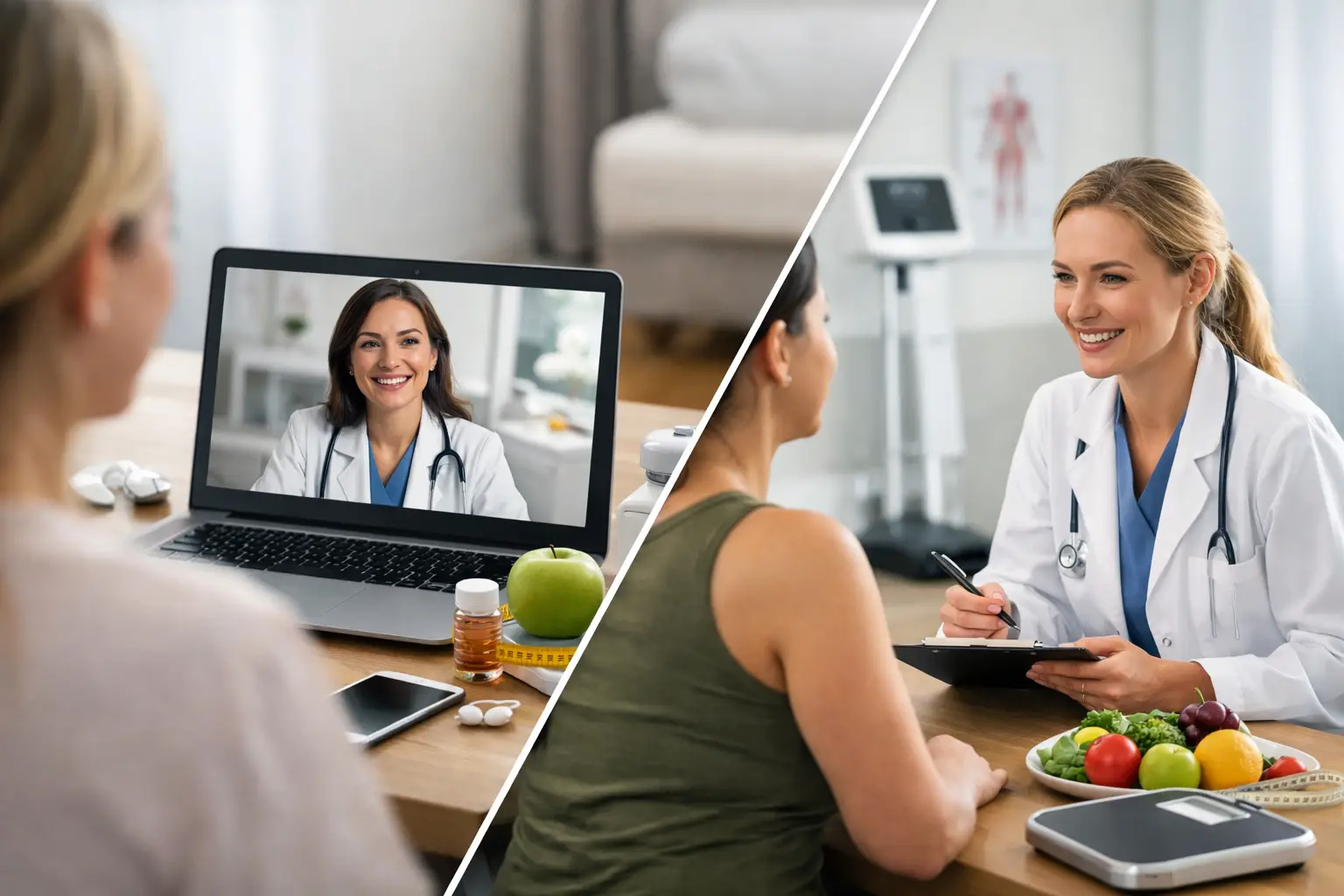
If you are deciding between telehealth weight loss vs clinic care, the real question is not which option sounds more modern. It is which one gives you the level of medical support, accountability, convenience, and access you actually need to follow through.
For many adults, weight loss has never been about a lack of effort. It has been years of trying diets, cutting calories, restarting exercise plans, and still feeling stuck. That is one reason medically guided care matters. When treatment includes proper screening, clinician oversight, and evidence-based options such as GLP-1 medications for eligible patients, the choice between telehealth and in-person care becomes much more practical.
Telehealth weight loss vs clinic: the core difference
Both models can offer medical weight loss. The difference is how care is delivered, how often you can realistically stay engaged, and how much friction exists between deciding to get help and actually receiving it.
A traditional clinic usually means visiting a physical office for consultations, follow-ups, vitals, and treatment planning. Some patients prefer that format because it feels familiar. They like sitting face-to-face with a provider and having a set place to go for care.
Telehealth weight loss programs deliver that guidance remotely. Appointments happen from home, work, or wherever life allows. You still go through an evaluation, discuss your health history, review goals, and receive a medically guided plan. If medication is appropriate, that decision is based on eligibility and clinical judgment, not marketing.
That difference may sound simple, but it changes a lot. For busy adults, convenience is not a small perk. It often determines whether treatment happens at all.
Convenience is not a luxury
One of the biggest advantages of telehealth is that it removes common barriers that keep people from starting or continuing care. There is no commute, no waiting room, and no need to block off half a workday for an appointment. If you are balancing a job, family, travel, or a packed schedule, that matters.
In-person clinics can still work well for people who live nearby, have flexible schedules, or simply feel more comfortable with office-based care. But many patients do not need to sit in an exam room every month to discuss progress, review side effects, adjust treatment, or get ongoing guidance.
That is especially true for structured medical weight loss programs built around regular check-ins and prescription management. In those cases, telehealth can feel less disruptive and more sustainable.
What about medical supervision?
This is where some people get cautious, and that is reasonable. Not every online weight loss offer is truly medical care. Some are just wellness programs with vague coaching, little oversight, and aggressive promises.
A legitimate telehealth model should include licensed medical providers, a clear eligibility process, review of your health history, and ongoing monitoring. If GLP-1 treatment is part of the discussion, it should be prescribed only when appropriate. That standard matters more than whether the visit happens on a screen or in an office.
A quality clinic can absolutely provide strong supervision. So can a quality telehealth provider. The better question is whether the program is built around real medical decision-making or around selling a trend.
For patients who have felt dismissed in the past, this distinction is important. Weight is affected by biology, appetite signaling, habits, stress, sleep, environment, and health history. A medically guided approach should reflect that complexity, not reduce everything to willpower.
Telehealth weight loss vs clinic for GLP-1 access
Many patients comparing telehealth weight loss vs clinic care are really comparing access to GLP-1 treatment with proper oversight. That makes sense. For eligible patients, these medications can help reduce hunger, quiet food noise, and support meaningful weight loss when used as part of a broader medical plan.
A local clinic may offer GLP-1 prescribing, but access can depend on location, appointment availability, pricing, and whether the practice is focused specifically on weight management. Some primary care settings discuss weight only briefly because the visit has to cover many other concerns.
Telehealth programs that specialize in medical weight loss are often designed to make this process more straightforward. You still need to qualify. You still need medical review. But the path from evaluation to treatment planning is often simpler and faster.
That does not mean telehealth is automatically better. If you have a complex medical history, need hands-on evaluation, or feel strongly that face-to-face visits help you stay committed, a clinic may be the better fit. But if your main obstacle is access, telehealth can remove a lot of unnecessary delay.
Cost often changes the decision
For many people, cost is where the decision becomes real. Traditional in-person programs can carry higher overhead, and patients sometimes end up paying for office visits, separate follow-ups, or a less predictable care structure.
Telehealth medical weight loss is often more transparent. When a program has a clear monthly starting price and defined follow-up process, it is easier to evaluate. That matters to patients who want to plan for care without guessing what the next bill will be.
Of course, low price alone should not be the selling point. Cheap weight loss programs that offer little clinical oversight can end up costing more in wasted time, poor guidance, and inconsistent care. The better value is accessible treatment with real medical support.
That is one reason many patients look for a structured monthly model. It can feel more manageable than piecing together appointments, prescriptions, and advice from multiple places.
Privacy and comfort matter more than people admit
Weight loss is personal. For some patients, walking into a clinic for weight-related care feels motivating. For others, it feels stressful, exposed, or uncomfortable.
Telehealth offers a level of privacy that many adults appreciate. You can have a clinical conversation from your own space without worrying about who sees you in a waiting room or how much time you spend getting there. That can lower the emotional barrier to starting care.
This should not be dismissed as a minor preference. When treatment feels easier to access emotionally, not just logistically, patients are often more willing to stay engaged.
Accountability looks different in each model
Some people assume in-person care automatically creates better accountability. Sometimes it does. If you know you are more likely to follow through when you physically show up somewhere, a clinic environment may help.
But accountability is not about the building. It is about the structure of the program. Regular follow-ups, clinician communication, progress review, and a plan that can be adjusted based on results are what keep patients moving forward.
A well-run telehealth program can provide strong accountability because it is easier to attend appointments consistently. A clinic can provide strong accountability because the routine feels formal and hands-on. Neither model wins by default.
The real question is honest and personal: which setup are you more likely to stick with for months, not just the first two weeks?
Who may prefer in-person clinic care?
A traditional clinic may be a better fit if you want face-to-face interaction, live close to a reputable provider, or have medical needs that are better evaluated in person. Some patients simply feel more reassured when care happens in a physical office, and that preference is valid.
Clinic care may also appeal to people who like the routine of going somewhere specific for appointments. For them, showing up in person creates commitment.
Who may prefer telehealth weight loss?
Telehealth tends to fit adults who want medically guided treatment without rearranging their life around appointments. It works well for people with demanding schedules, limited local options, privacy concerns, or frustration with long waits for care.
It can also be a strong fit for patients who want a focused medical weight loss program rather than scattered advice from general wellness sources. When the program is structured, clinically supervised, and built around ongoing support, telehealth becomes more than convenient. It becomes practical.
That is why many patients across the country choose a provider such as South Florida Trim Clinic. The model combines physician-guided weight loss care, GLP-1 options if eligible, transparent starting pricing, and the convenience of remote access across 47 states.
The better choice depends on what helps you stay in care
There is no universal winner in telehealth weight loss vs clinic care. The best option is the one that gives you legitimate medical oversight and fits your real life well enough that you will keep going.
If an in-person clinic helps you feel supported and consistent, that can be the right move. If telehealth removes the delays, inconvenience, and discomfort that have kept you from getting help, that can be the better path.
What matters most is not choosing the trendiest format. It is choosing a medically guided program that treats weight management like healthcare, not a personal failure. The right support should make progress feel possible, realistic, and finally within reach.