
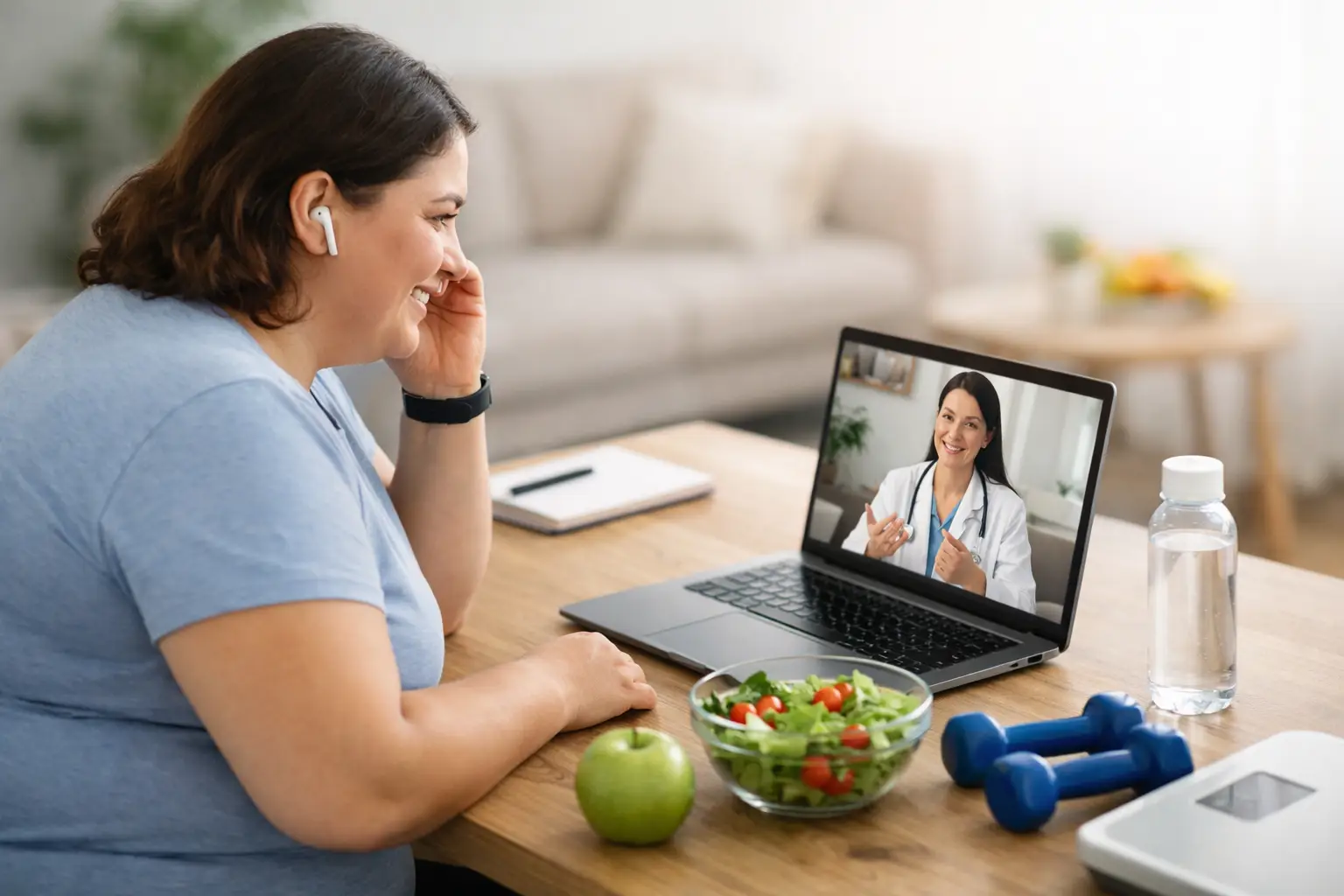
A virtual obesity treatment program is designed for people who are tired of trying to solve a medical concern with another restrictive diet, fitness challenge, or wellness app. If weight gain, persistent hunger, cravings, or food noise have made it difficult to follow through on past plans, clinically guided care can provide a more accountable path forward without requiring frequent office visits.
Obesity is not a character flaw or a simple failure of willpower. Weight is influenced by biology, appetite regulation, sleep, stress, medications, medical history, environment, and years of conflicting food advice. For eligible patients, telehealth can make it easier to access licensed medical providers, discuss evidence-based treatment options, and receive ongoing support from home.
What Is a Virtual Obesity Treatment Program?
A virtual obesity treatment program delivers medical weight management through secure telehealth visits. Rather than handing you a generic meal plan and asking you to manage the rest alone, the program begins with an evaluation of your health history, weight-related concerns, current medications, and treatment goals.
The provider determines whether medical weight loss treatment is appropriate and discusses options based on your individual needs. That may include nutrition and activity guidance, behavior-focused strategies, monitoring, and prescription medication when clinically appropriate. GLP-1-based treatment options may be available for eligible patients, but they are not automatically right for everyone.
The virtual format is especially useful for busy adults who need care that fits around work, family, travel, or limited local access to obesity medicine. Appointments can take place privately from home, while the medical relationship and safety standards remain central to the experience.
Why Medical Guidance Matters
Many weight loss programs make promises without addressing the medical factors that can affect appetite, metabolism, or adherence. A medically guided program takes a different approach. It starts with the question, “What is appropriate for this patient?” rather than “What trend is popular right now?”
A licensed provider can review whether a medication may interact with your current treatment plan, whether certain health conditions require added caution, and whether your progress calls for an adjustment. This matters with prescription weight loss medications, including GLP-1 options, which require eligibility screening and ongoing monitoring.
GLP-1 medications may help some patients feel fuller sooner, reduce appetite, and quiet constant thoughts about food. For people who have spent years feeling like hunger is always in control, that change can be meaningful. Still, medication is a tool, not a substitute for clinical judgment or long-term habits. Side effects, costs, access, medical history, and personal goals all shape whether it is a good fit.
How the Virtual Process Typically Works
The best telehealth programs reduce unnecessary barriers without rushing the clinical process. You should expect clear steps, straightforward communication, and a real evaluation before any prescription decision is made.
Start with an eligibility review
Your initial consultation gives the provider a fuller picture of your health. You may discuss your weight history, prior attempts to lose weight, hunger patterns, current medications, relevant conditions, and what has made consistency difficult in the past. Be candid. The purpose is not to judge you. It is to identify a safe, realistic treatment plan.
Not every patient is eligible for every medication. Pregnancy, certain medical conditions, medication interactions, and personal or family history can affect treatment options. A responsible program explains those considerations clearly instead of promising a specific prescription before evaluating you.
Receive a personalized care plan
If you are eligible, your provider may recommend a treatment plan that includes prescription medication, lifestyle guidance, or both. The plan should be built around sustainable progress, not extreme rules that fall apart after two weeks.
For some patients, the first goal is reducing food noise and creating enough appetite control to make practical changes feel possible. For others, it may be building regular meals, improving protein intake, moving more consistently, or addressing patterns such as evening overeating. There is no single correct plan for every body.
Stay connected for follow-up care
Weight management is ongoing care. Follow-up visits allow your provider to assess progress, discuss side effects, review questions, and decide whether the plan should stay the same or change. That continued relationship distinguishes physician-guided treatment from a one-time online questionnaire.
Progress is not always linear. Travel, stress, illness, holidays, plateaus, and changing routines can all affect the scale. Regular communication helps keep a temporary setback from turning into a reason to quit.
Who May Benefit From Virtual Care?
Telehealth weight management can be a practical option for adults who want more structure than self-directed dieting has provided. It may be particularly helpful if you have repeatedly lost and regained weight, struggle with constant hunger or cravings, or want to explore prescription options with medical oversight.
It can also fit people who value privacy and convenience. You may not have time to drive to a weekly office appointment, sit in a waiting room, or rearrange your schedule around local clinic hours. Virtual care lets you meet with a provider while keeping the process more manageable.
That said, virtual care is not the right solution in every situation. Some patients need in-person evaluation, laboratory testing, specialty care, or urgent medical attention. A reputable provider will tell you when telehealth is appropriate and when another level of care is needed.
What to Look for in a Virtual Obesity Treatment Program
Convenience matters, but it should not be the only factor. Before enrolling, look closely at how the program handles medical oversight, pricing, prescriptions, and follow-up.
Choose a service that uses licensed providers and makes eligibility screening part of the process. Be cautious of programs that market medication as guaranteed, avoid discussing potential side effects, or make dramatic promises about a specific number of pounds lost. Safe care should be clear about what treatment can and cannot do.
Ask what the monthly price includes. Transparent programs explain the cost of membership, follow-up visits, medication if prescribed, and any requirements that may affect your total expenses. Medications start at $149; exact pricing varies by medication type and potency.
It is also worth asking how you will communicate with the care team if you have a question between appointments. A program should make it clear what support is available, how refills are handled when appropriate, and what to do if you experience concerning symptoms.
Setting Realistic Expectations for Weight Loss
The goal of treatment is not to chase a perfect number or punish yourself into a smaller body. It is to improve health, function, confidence, and your ability to make choices without feeling controlled by hunger or all-or-nothing thinking.
Results vary from person to person. Medication response, adherence, sleep, nutrition, activity, stress, and health conditions all play a role. Some patients see meaningful changes early, while others need more time or a different strategy. A provider should help you measure progress beyond the scale, including energy, mobility, waist measurements, blood pressure, eating patterns, and confidence with daily routines.
The most sustainable plans are usually the ones patients can continue when life gets busy. That may mean choosing meals that are realistic for your schedule, learning how to navigate restaurant meals, and building movement into a normal week instead of trying to live by rules that only work under ideal conditions.
A More Accessible Way to Start
You do not need to prove that you have suffered enough before seeking medical help for obesity. If years of dieting have left you frustrated, ashamed, or convinced that nothing works, a clinical conversation can offer a different starting point.
A virtual program cannot remove every challenge, but it can bring qualified guidance, eligibility-based treatment options, and ongoing accountability closer to home. The next useful step is not another drastic reset. It is an honest conversation with a medical provider about what support may be appropriate for you.